1. Overview
Jushiro Ukitake is the Captain of the 13th Division in the Gotei 13, one of the oldest and most respected Soul Reapers in the history of Soul Society. Alongside his closest friend Shunsui Kyoraku, Ukitake was a student of Genryusai Yamamoto, the Captain-Commander of the Gotei 13, and the two are considered among the most powerful captains in the organization. Ukitake is distinguished not only by his immense combat ability but by his gentle, compassionate nature and his chronic respiratory illness that has plagued him since childhood. He was saved from death as a young boy by Mimihagi, the right hand of the Soul King, which took up residence in his body and kept him alive at the cost of permanent frailty. Despite his illness, Ukitake serves as a pillar of wisdom and kindness within the Gotei 13, mentoring young Soul Reapers including Rukia Kuchiki and demonstrating that true strength comes in many forms. His role in the story is that of a supporting figure who provides guidance and moral clarity, but his quiet presence belies a warrior whose power has been respected for over two thousand years. Ukitake's ultimate sacrifice during the Thousand-Year Blood War arc, in which he returns Mimihagi to the Soul King in a desperate attempt to save all three worlds from collapse, cements his legacy as a deeply selfless character in Bleach. His death represents the passing of an era and leaves a void in the Gotei 13 that can never truly be filled.
2. Appearance
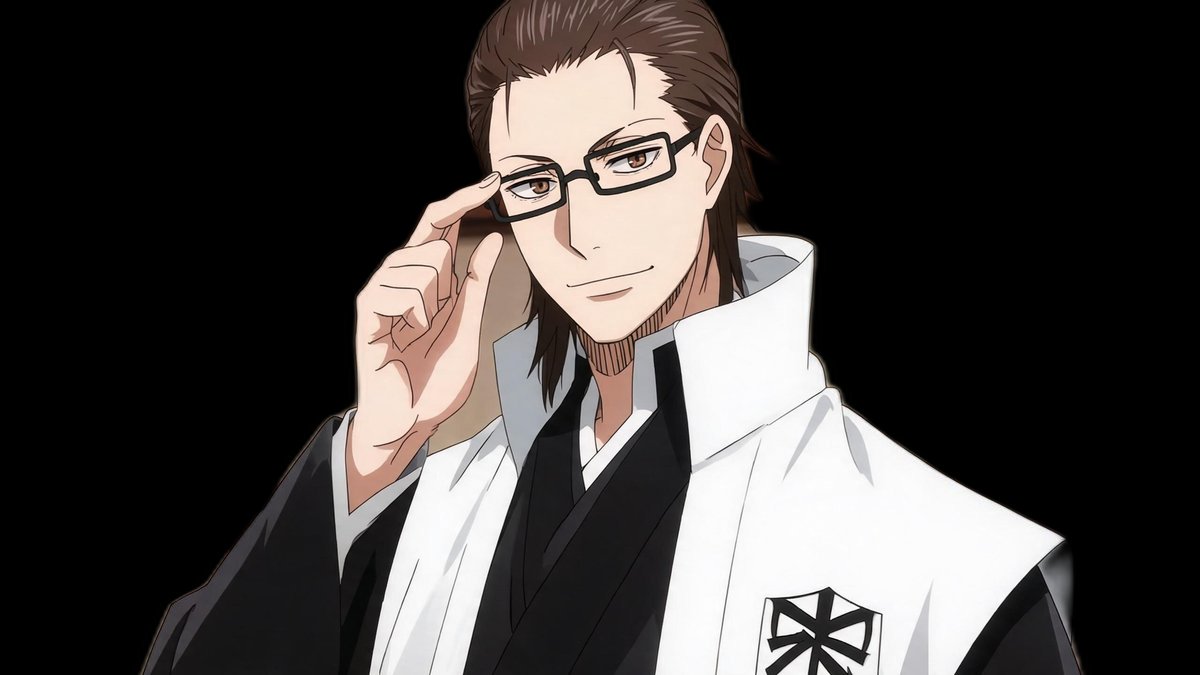
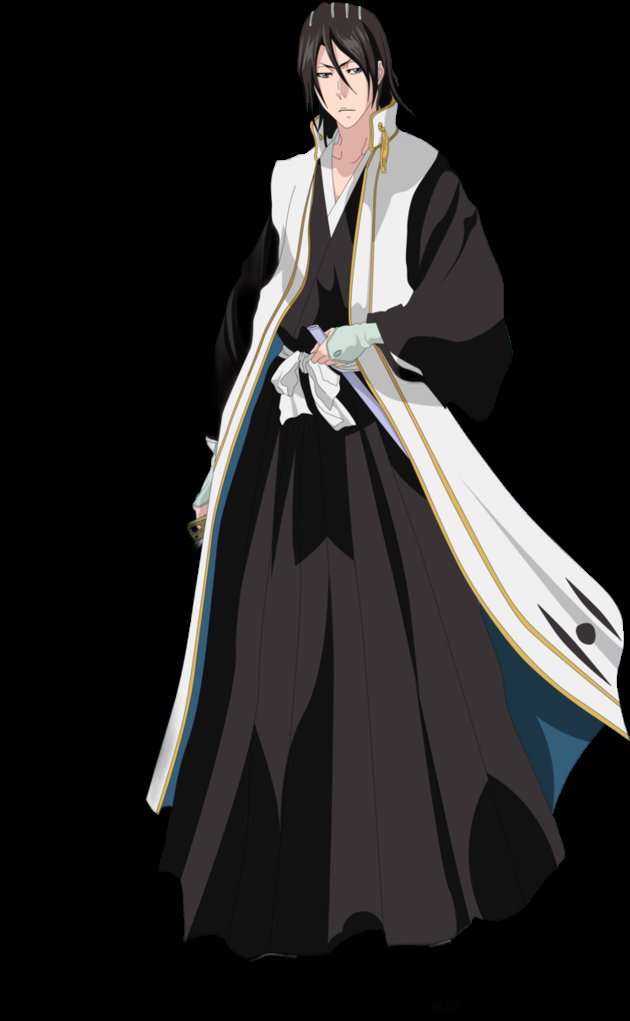
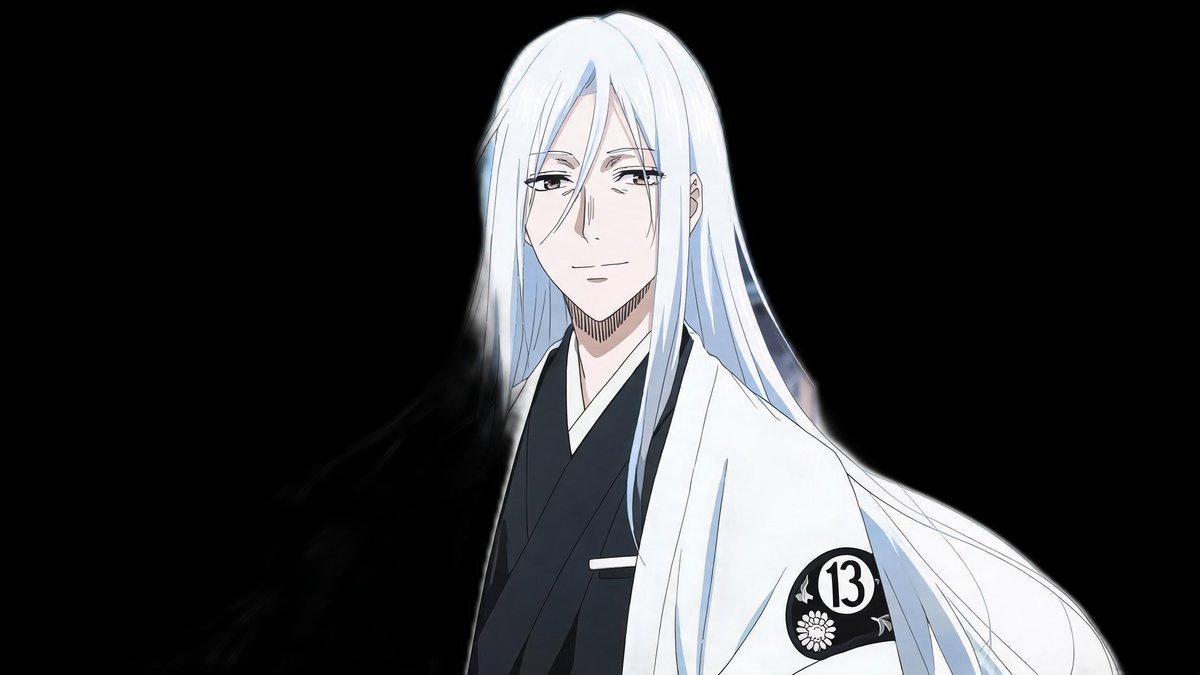
Jushiro Ukitake is a tall, slender man with long white hair that he typically ties back at the nape of his neck with a white ribbon, allowing two strands to frame his face. He has pale skin, warm brown eyes set in a perpetually kind expression, and a gentle smile that reflects his compassionate nature. He is almost always seen carrying a white handkerchief, which he uses to cover his mouth during his frequent coughing fits caused by his chronic lung disease. Ukitake wears the standard white captain's haori over his black shihakusho, but unlike most captains he often keeps his haori closed and neatly arranged, reflecting his formal and respectful demeanor. His most distinctive visual feature is his unique zanpakuto, Sogyo no Kotowari, which is unlike any other in Soul Society. Instead of a single blade, Sogyo no Kotowari consists of two curved blades connected at the hilt by a long purple cord, resembling a traditional Chinese jian or a double-ended glaive. The weapon is enormous, nearly as tall as Ukitake himself, and when not in use he carries it across his back. The dual blades represent the duality inherent in his abilities, which focus on balance and redirection rather than direct destruction. During his Bankai release, which was never fully shown in the series, Ukitake's appearance is said to transform dramatically, with his haori and shihakusho being replaced by flowing white robes that merge with his spiritual energy. Even in his final moments, when his body begins to deteriorate from returning Mimihagi to the Soul King, Ukitake maintains his gentle smile and dignified posture, facing death with the same grace with which he lived his life.
3. Personality
Jushiro Ukitake is defined by his extraordinary kindness and compassion, qualities that make him unique among the Gotei 13 captains. He treats everyone with respect and warmth, from the lowest-ranking Soul Reaper to his fellow captains, and he believes in redemption, understanding, and the inherent worth of every life. His gentle nature is not naivety but a conscious choice, informed by his awareness of his own mortality and his gratitude for the borrowed time he has been given. Ukitake possesses a sharp intellect and deep wisdom accumulated over more than two thousand years of service, but he dispenses advice with humility rather than condescension. He is a patient listener and a thoughtful speaker, choosing his words carefully to avoid causing unnecessary pain. Despite his gentle demeanor, Ukitake is fiercely protective of those under his care. He refuses to abandon his subordinates in danger, and he will fight with everything he has when someone he loves is threatened. His battle against the 8th Espada Szayelaporro Granz, despite his illness, demonstrates that his physical frailty does not diminish his resolve. Ukitake carries a heavy burden of guilt over his survival, knowing that he lived while others died. His illness has given him a unique perspective on life, making him appreciate every moment and every relationship. He is deeply spiritual, finding solace in his faith and his duties. His sense of humor is gentle and self-deprecating, often making light of his own condition to put others at ease. Ukitake's greatest fear is not death but failing those who rely on him, a fear that drives his final sacrifice. His character embodies the Bleach theme that the strongest warriors are not those who crush their enemies but those who protect what matters most.
4. Abilities & Powers
Ukitake's zanpakuto Sogyo no Kotowari (Twin Fish of Truth) is among the most unique and mysterious weapons in Bleach. Its sealed form is the distinctive double-bladed polearm connected by a cord. The Shikai is activated with the command "All waves, rise and become my shield. Lightning, strike and become my blade," causing the two blades to separate further and glow with spiritual energy. Sogyo no Kotowari's primary ability is energy absorption and redirection. Ukitake can use the left blade to absorb incoming energy attacks, including Cero, kido spells, and other projectile techniques, and channel that energy through the cord connecting the blades to the right blade, which can then redirect the energy back at the opponent. This ability makes Ukitake a natural counter to ranged attackers and energy-based fighters, as their own power can be turned against them. The absorption and redirection process requires precise timing and immense spiritual control, as mishandling the energy could result in catastrophic feedback. Ukitake's mastery of this technique is such that he can absorb attacks of tremendous power, including cero from an Espada, without apparent difficulty.
Ukitake's Bankai has never been revealed in the series, a deliberate narrative choice that has generated enormous speculation among fans. Given that Ukitake was one of the oldest and most powerful captains, his Bankai was presumably of tremendous scale and complexity. Tite Kubo has stated in interviews that Ukitake's Bankai was designed but never used in the story due to the character's death before it could be shown. Fans speculate that the Bankai would involve an expansion of his absorption and redirection abilities on a massive scale, possibly allowing him to control the energy of an entire battlefield. Beyond his zanpakuto, Ukitake is a master of kido, with particular expertise in high-level defensive and healing spells. He is a highly skilled kido practitioner among the captains, capable of casting spells at high levels without incantations. His swordsmanship is exceptional, having been trained personally by Yamamoto for over two thousand years. Ukitake's spiritual pressure is immense, befitting a captain of his age and rank, though his illness prevents him from sustaining maximum output for extended periods. His restricted growth in the Right Arm of the Soul King, Mimihagi, granted him extraordinary vitality and the ability to survive his otherwise fatal illness, but this came at the cost of limiting his shinigami potential. Ukitake's combat style is defensive and precise, conserving energy and waiting for the right moment to counterattack rather than overwhelming opponents with brute force. His tactical acumen is among the best in the Gotei 13, reflecting centuries of experience.
5. Story Arcs
Turn Back the Pendulum Arc: Over one hundred years before the main Bleach story, Ukitake is already established as the Captain of the 13th Division. He and his friend Shunsui Kyoraku are the only captains who openly oppose the exile of Kisuke Urahara after the Hollowfication incident, believing that Urahara was framed by Aizen. Ukitake and Kyoraku's protest, delivered directly to Captain-Commander Yamamoto, demonstrates their moral courage and willingness to challenge authority when they believe injustice is being done. Though their protest fails, their loyalty to Urahara plants seeds that will later bear fruit. During this period, Ukitake is shown as a younger, healthier man, though still affected by his illness. He serves as a mentor to numerous Soul Reapers and maintains the 13th Division's reputation for excellence.
Soul Society Arc: Ukitake plays a key role in the Soul Society arc as one of the few captains who questions the execution of Rukia Kuchiki. Alongside Shunsui Kyoraku, he confronts Captain-Commander Yamamoto, risking his position and life to challenge the legality of the execution. Ukitake reveals that he was a student of Yamamoto and that the old captain had taught him that "justice" must be tempered with compassion. When the execution proceeds despite their protests, Ukitake and Kyoraku physically intervene, using their combined power to block the Sokyoku, the execution weapon. Ukitake uses his own body to hold the Sokyoku in place, suffering severe injuries from its heat, but succeeds in buying enough time for Ichigo to rescue Rukia. This act of defiance costs Ukitake dearly, exacerbating his illness and requiring extended recovery, but it establishes him as a morally courageous character in the series.
Arrancar Arc: Ukitake participates in the battles against the Arrancar army, though his illness limits his direct combat involvement. He engages the 8th Espada Szayelaporro Granz in battle alongside his lieutenant Rukia Kuchiki and the 13th Division. Despite his illness, Ukitake demonstrates that his combat skills remain sharp, using Sogyo no Kotowari's energy absorption to counter Szayelaporro's attacks. However, the battle is interrupted, and Ukitake does not achieve a decisive victory. He later provides strategic support during the Fake Karakura Town battle, coordinating division movements from the Soul Society rather than fighting on the front lines. Throughout this arc, Ukitake's health visibly declines, and he begins coughing blood with increasing frequency, foreshadowing his eventual fate.
Thousand-Year Blood War Arc: This arc contains Ukitake's final and most significant role. When Yhwach invades the Soul Society, Ukitake fights against the Sternritter despite his failing health. As the war progresses, it becomes clear that Yhwach's goal is to kill the Soul King, which would cause the collapse of all three worlds. Ukitake, who has carried Mimihagi, the right hand of the Soul King, within his body since childhood, makes the ultimate sacrifice. He performs a ritual to return Mimihagi to the Soul King, hoping to stabilize the dying god and prevent the collapse of reality. The ritual costs Ukitake his life, as his body, which had been sustained by Mimihagi for decades, begins to disintegrate. In his final moments, Ukitake entrusts Rukia with his captain's haori and his will, passing the torch to the next generation. His death is among the most tragic in the series, as he gives everything to save a world that he may not live to see preserved. Ukitake's sacrifice temporarily stabilizes the Soul King but fails to stop Yhwach, though it buys critical time for his allies.
6. Relationship Network
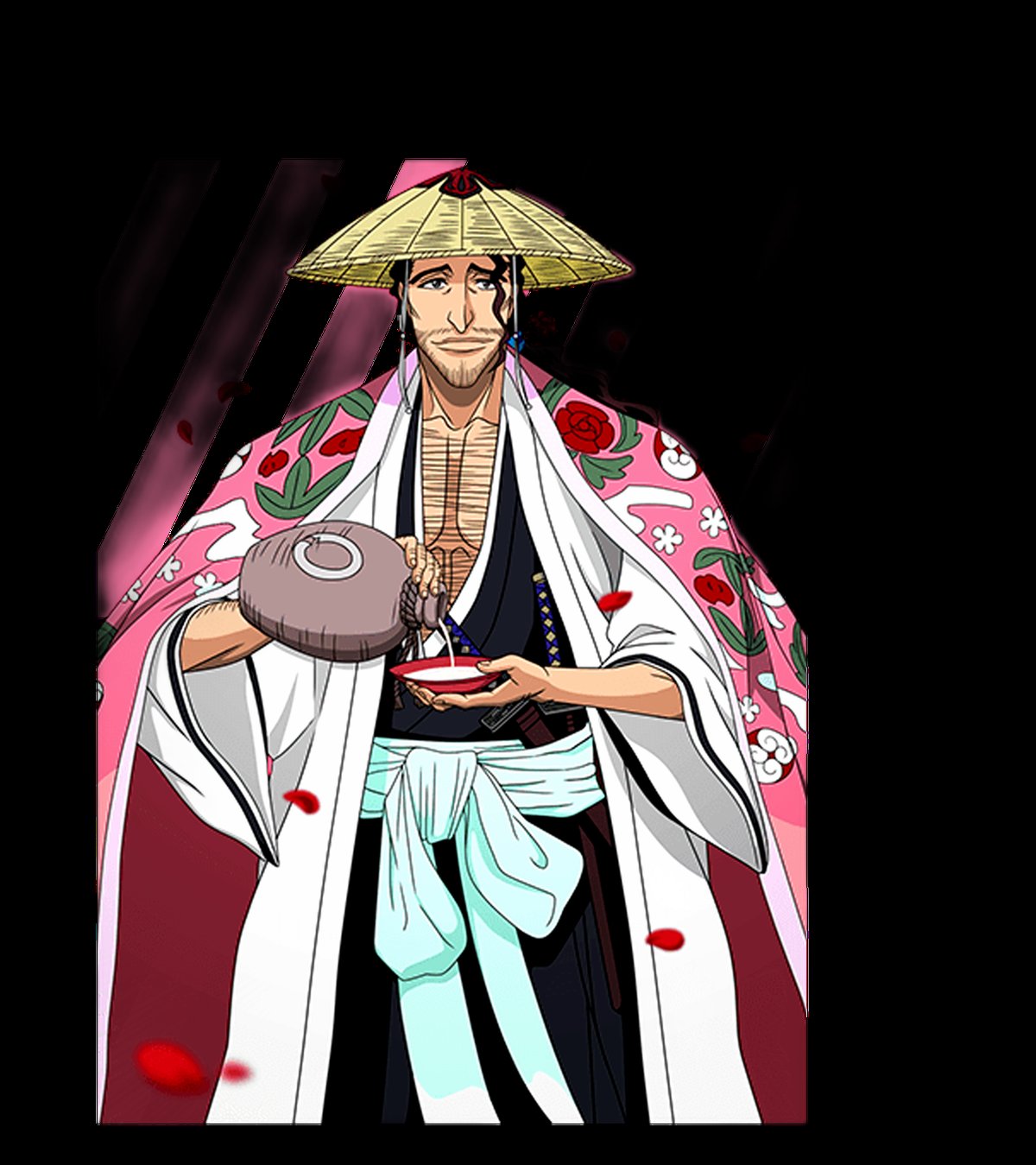
Ukitake's relationship with Shunsui Kyoraku is the most important friendship in his life. The two have been inseparable since childhood, training together under Yamamoto, rising through the ranks together, and eventually becoming captains of the 13th and 8th Divisions respectively. Their personalities complement each other perfectly, with Ukitake's sincerity balancing Kyoraku's playfulness. They are often seen sharing sake and reminiscing about old times, and their bond is strong enough that they can communicate without words. When Ukitake dies, Kyoraku's grief is profound, and he carries his friend's memory as he assumes the role of Captain-Commander. Ukitake's relationship with Rukia Kuchiki is that of a mentor and father figure. He took Rukia into the 13th Division when she graduated from the academy, recognizing her potential and her need for guidance. He teaches her not only combat skills but also the importance of compassion and justice. Rukia's growth into a confident Soul Reaper and eventually a captain is a direct result of Ukitake's mentorship. Ukitake's bond with his former teacher Genryusai Yamamoto is complex, blending deep respect with moments of principled disagreement. He challenges Yamamoto when he believes the old captain is wrong, but he never stops honoring his teacher's legacy. Ukitake maintained a distant but cordial relationship with Kisuke Urahara, having supported him during the Hollowfication incident despite being unable to prevent his exile. His relationship with the other captains is uniformly respectful, as his gentle nature and long service have earned him universal respect. His connection to Mimihagi, the right hand of the Soul King, defines his physical existence, but it is the relationships he built with others that define his legacy.
7. Cultural Impact & Popularity
Jushiro Ukitake is consistently ranked among the most beloved supporting characters in Bleach, admired for his kindness, wisdom, and tragic sacrifice. His gentle captain archetype, a powerful warrior who prefers peace over violence, has influenced subsequent anime characters who embody similar compassionate strength. Ukitake's design, with his long white hair, kind eyes, and distinctive double-bladed zanpakuto, is instantly recognizable and widely appreciated within the fan community. His ultimate sacrifice, returning Mimihagi to the Soul King at the cost of his own life, is frequently cited as an emotionally devastating moment in the Thousand-Year Blood War arc. The mystery surrounding his Bankai, which was never revealed in the series, has fueled decades of fan discussion and speculation, with Tite Kubo's acknowledgment that it was designed but never shown only deepening the fascination. In Bleach popularity polls, Ukitake consistently places within the top twenty, an impressive position for a character with limited combat screentime. His English voice actor, Steve Kramer, and Japanese voice actor, Hideo Ishikawa, have both received praise for capturing Ukitake's gentle warmth and underlying strength. In Bleach video games, Ukitake appears as a playable character with a moveset centered around his energy absorption and redirection abilities. His relationship with Shunsui Kyoraku is celebrated as one of the best friendship dynamics in anime, often highlighted in analyses of Bleach's character writing. The scene of Ukitake and Kyoraku blocking the Sokyoku together remains an iconic moment in the Soul Society arc.
8. FAQ
What is Jushiro Ukitake's illness and how did he survive it?
Ukitake suffered from a chronic respiratory illness since childhood, described as a lung disease that caused persistent coughing and periodic hemorrhaging. He was saved from death by Mimihagi, the right hand of the Soul King, which took residence in his body and sustained his life. This kept his illness from killing him but left him permanently frail and unable to sustain maximum combat output for extended periods.
What is Sogyo no Kotowari and how does it work?
Sogyo no Kotowari (Twin Fish of Truth) is Ukitake's unique dual-bladed zanpakuto connected by a cord. Its Shikai ability allows Ukitake to absorb incoming energy attacks with the left blade and redirect them through the right blade. This makes him a natural counter to energy-based fighters, as techniques like Cero and kido spells can be turned back against their users with greater force.
What is the relationship between Ukitake and Shunsui Kyoraku?
Ukitake and Kyoraku have been best friends since childhood, training together under Captain-Commander Yamamoto. They rose through the ranks simultaneously and became captains of the 13th and 8th Divisions respectively. Their personalities complement each other, with Ukitake's sincerity balancing Kyoraku's playfulness. When Ukitake dies, Kyoraku's grief shapes his tenure as the new Captain-Commander, carrying his friend's memory forward.
How does Ukitake die in Bleach?
Ukitake dies during the Thousand-Year Blood War arc when he performs a ritual to return Mimihagi, the right hand of the Soul King, to the dying god. His body, sustained by Mimihagi for decades, begins to disintegrate without it. Before dying, he entrusts his captain's haori and his will to Rukia Kuchiki, passing the torch to the next generation. His sacrifice temporarily stabilizes the Soul King.
Was Ukitake's Bankai ever shown in Bleach?
No, Ukitake's Bankai was never revealed in Bleach. Tite Kubo has confirmed in interviews that Ukitake's Bankai was designed but was never used in the story due to the character's death before it could be shown. This has generated enormous fan speculation, with theories suggesting the Bankai would involve large-scale energy manipulation or absorption on a catastrophic scale.