1. Overview
Kisuke Urahara is the exiled former Captain of the 12th Division and founder of the Shinji Research and Development Institute, the predecessor to the current Shinigami Research and Development Division. Over a century before the main events of Bleach, Urahara was framed by Sosuke Aizen for the Hogyoku experiments and forced to flee the Soul Society alongside Yoruichi Shihoin and Tessai Tsukabishi. He established residence in Karakura Town, operating a small general store that serves as a front for his real business: selling soul candy and providing covert support to spiritually aware humans. Urahara is widely regarded as one of the sharpest minds in the Bleach universe, possessing knowledge spanning kido theory, zanpakuto mechanics, Hollow physiology, and the fundamental principles governing the three worlds. He is the creator of the Hogyoku, an artifact of immense power capable of breaking the boundary between Soul Reapers and Hollows, and the inventor of the Bankai acceleration method that allowed Ichigo to achieve Bankai in three days instead of decades. Despite his exile, Urahara has maintained a persistent influence over Soul Society politics and serves as a silent guardian of Karakura Town, operating from the shadows with a network of contacts that spans the divided worlds.
2. Appearance
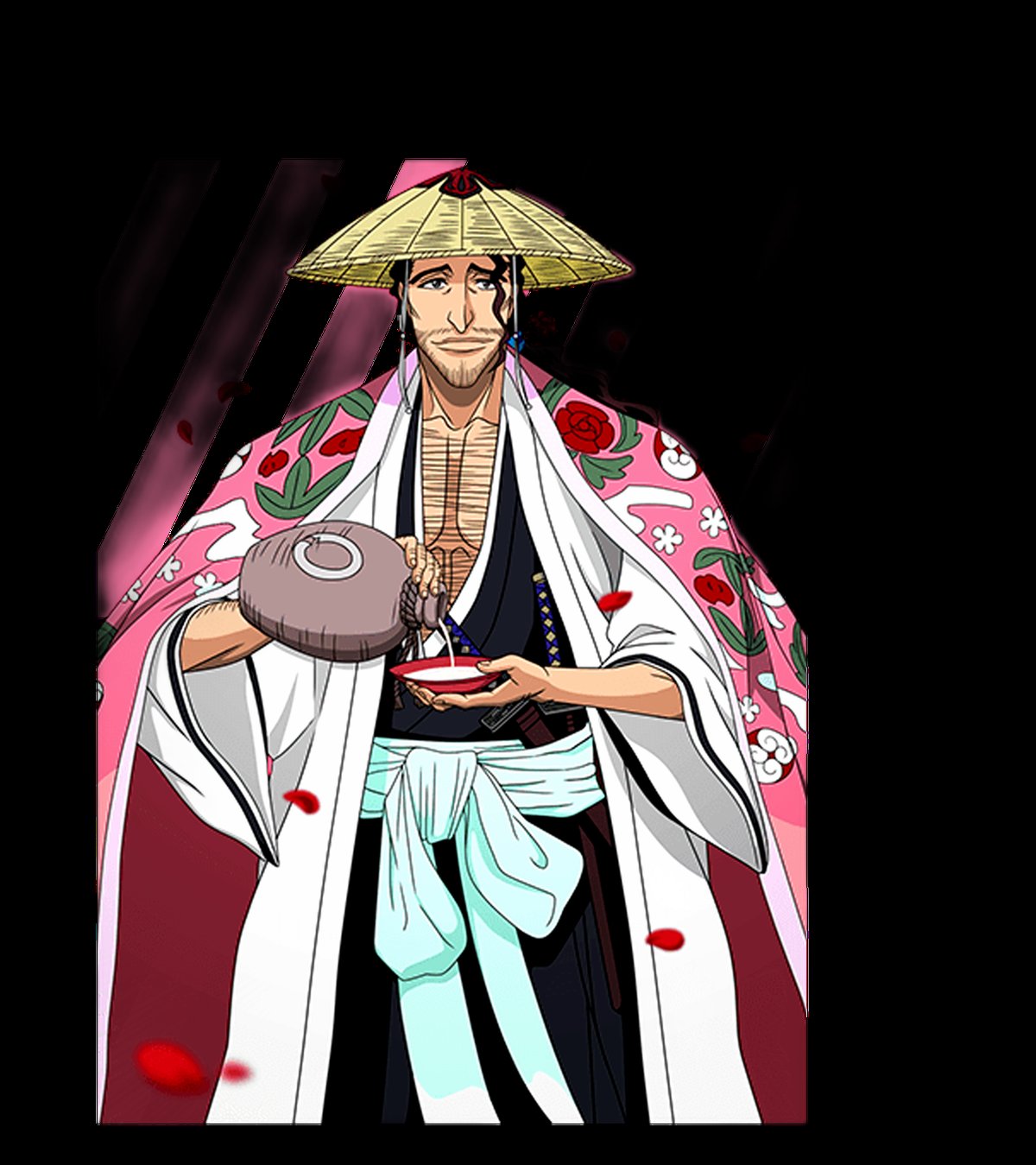
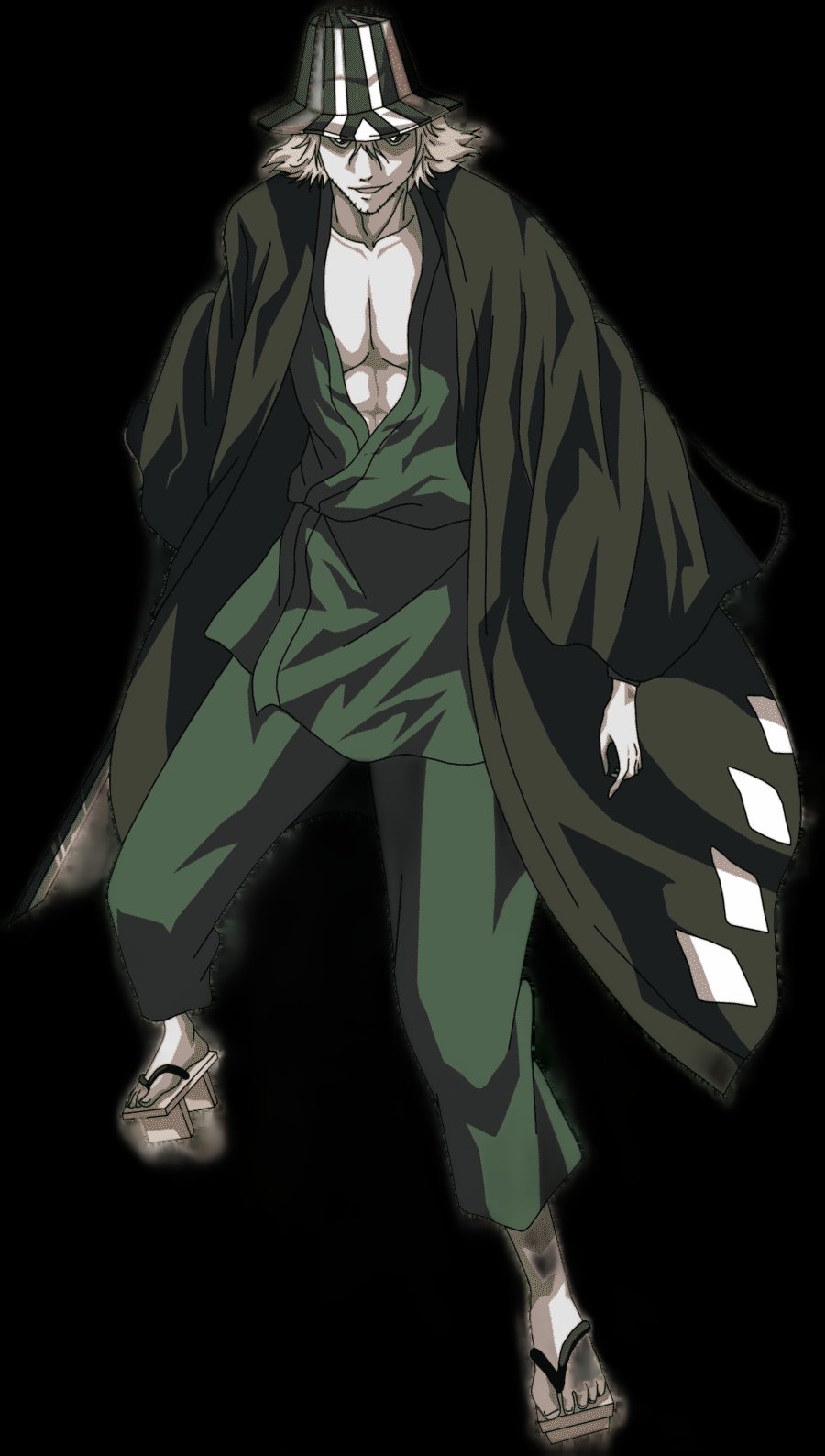
Kisuke Urahara cuts a distinctive figure that defies the traditional image of a Soul Reaper captain. He is of average height with a lean build, dirty blond hair that is typically unkempt and covered by his signature green-and-white striped bucket hat. His eyes, often hidden in shadow beneath the hat's brim, are sharp and calculating, betraying the intelligence behind his carefree demeanor. Urahara is almost never seen without his wooden sandals, known as geta, which clack against the ground with each step and produce a rhythmic sound that has become synonymous with his presence. His standard attire consists of a dark kimono covered by a lightweight brown haori with a distinctive diamond pattern along the hem. He carries a folding fan tucked into his obi, which he uses both as a prop during his theatrical performances and as a genuine weapon channeling his kido. This casual, almost eccentric appearance contrasts starkly with his past as a captain of the Gotei 13, serving as a deliberate choice to distance himself from his former identity.
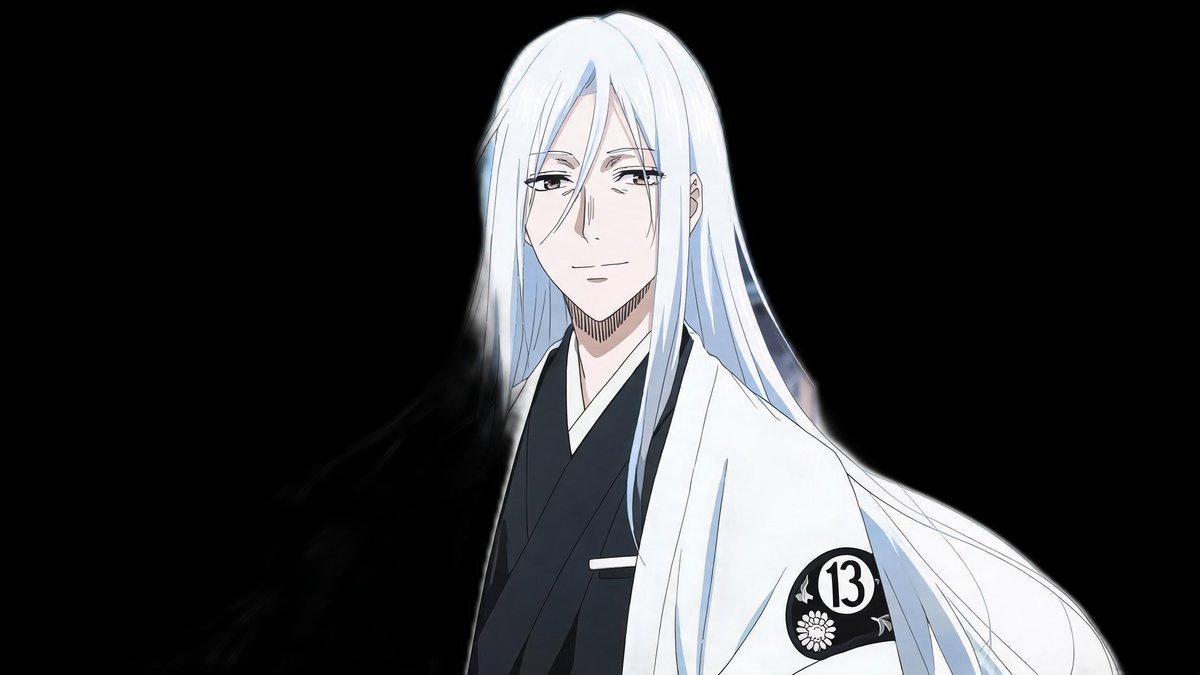
When Urahara assumes his captain regalia in flashback sequences and during critical battles, his appearance transforms entirely. He dons the standard white captain's haori over a black shihakusho with his zanpakuto Benihime carried at his waist, appearing every bit the formidable commander he once was. In his Bankai state during the Thousand-Year Blood War arc, Urahara's appearance undergoes a dramatic transformation: a giant manifestation of Benihime in the form of a skeletal, kimono-clad female figure splits open behind him, surrounded by threads of crimson energy that extend outward to restructure the battlefield. Despite the serious nature of these transformations, Urahara maintains his characteristic grin throughout, a visual representation of his philosophy that even in the most dire circumstances, maintaining composure is the greatest weapon one can possess.
3. Personality
Kisuke Urahara is defined by a deliberate dichotomy between his public persona and his true nature. On the surface, he presents himself as a cheerful, absent-minded shopkeeper who enjoys teasing his customers, making terrible jokes, and appearing perpetually unconcerned with the weight of the world. He speaks in a deceptively casual tone, often deflecting serious conversations with humor or by pretending not to understand the gravity of a situation. This facade is so consistent and convincing that even his closest allies occasionally underestimate him. Behind this mask of frivolity lies a mind of extraordinary depth and a soul burdened by immense guilt. Urahara carries the weight of his past actions, particularly the creation of the Hogyoku and the resulting consequences, with a quiet resolve that he never allows others to see. He is a master strategist who plans dozens of moves ahead, orchestrating events from the shadows with the patience of someone who has lived for centuries. His willingness to manipulate those around him, including his friends, for the greater good is both his greatest strength and his most controversial trait.
Urahara operates on a moral code that prioritizes outcomes over intentions. He is willing to make difficult choices that others cannot, including sacrificing pieces on the board to win the war. This pragmatic approach sometimes puts him at odds with more idealistic characters like Ichigo. He genuinely cares for the people of Karakura Town and feels a deep responsibility for the chaos his inventions have caused, but he expresses this care through action rather than words. Throughout the series, Urahara consistently puts himself in harm's way to protect others, from his covert aid during the Soul Society arc to his direct confrontation against Askin Nakk Le Vaar in the Thousand-Year Blood War. He has an almost paternal relationship with Ichigo, Rukia, and the other young Soul Reapers, guiding their growth while never taking credit for their achievements. His greatest fear is not death but failure, and his driving motivation is the desire to atone for the unintended consequences of his genius by ensuring that his inventions are used to protect rather than destroy.
4. Abilities & Powers
Kisuke Urahara is an exceptionally versatile fighter in the Bleach universe, combining zanpakuto abilities, advanced kido, strategic genius, and technological inventions into a seamless combat style. His zanpakuto Benihime (Crimson Princess) is a cane-like weapon that, in its sealed state, resembles a curved walking stick. Upon release, Benihime reveals itself as a slender katana with a reddish-pink blade. Benihime's primary abilities include Nake Benihime (Roar, Benihime), which fires concentrated blood-red energy blasts from the blade, and Tatsuki Benihime (Dance, Benihime), which creates a shield of blood-red energy that can block attacks and redirect them. His Shikai's versatility makes him effective at both offensive and defensive combat, and he uses the energy blasts to create openings for his kido-based follow-up attacks. Urahara's mastery of kido is exceptional, placing him among the most skilled practitioners in the Gotei 13's history. He can cast high-level bakudo and hado without incantations, combining them with his zanpakuto abilities in creative combinations. He invented the Gintai (soul candy gigai) and numerous other technological marvels, including the devices that allow Soul Reapers to travel between the living world and the Soul Society.
Urahara's Bankai, Kannonbiraki Benihime Aratame (Reforming Crimson Princess), is a conceptually unique and powerful Bankai in the series. When activated, a giant female figure in a crimson kimono with a skeletal exposed torso and ribcage emerges behind Urahara, connected to him by threads of red energy. This Bankai has the ability to restructure, modify, and rebuild anything within its range, including living beings. Urahara can use this power to heal wounds by restructuring damaged tissue, disassemble an opponent's body by separating the components of their physical form, or modify the battlefield to create tactical advantages. This ability is fundamentally different from Orihime's rejection-based healing: Benihime Aratame physically restructures matter rather than rejecting past events. During his battle against Askin Nakk Le Vaar, Urahara demonstrates the terrifying offensive application of his Bankai by restructuring Askin's body from the inside, nearly killing the elite Sternritter. The Bankai's weakness is that it requires Urahara to understand the structure of what he is modifying, and sufficiently complex targets can resist or counteract the restructuring process. Urahara is also a skilled hand-to-hand combatant trained by Yoruichi Shihoin, though he rarely relies on physical combat in serious battles.
5. Story Arcs
Turn Back the Pendulum Arc. This flashback arc reveals Urahara's origin as a captain. He is introduced as the newly appointed Captain of the 12th Division and founder of the SRDI. He recruits Hiyori Sarugaki as his lieutenant and begins research on the Hogyoku, an artifact that can break the boundaries between Soul Reaper and Hollow. His assistant and friend, Sosuke Aizen, who was then a lieutenant in the 5th Division, manipulates events to frame Urahara for illegal Hollowfication experiments. When Urahara's Visored experiments produce successful results with Shinji Hirako and other captains, Aizen reveals the truth and forces Urahara into exile alongside Yoruichi Shihoin and Tessai Tsukabishi. This arc establishes the foundation for Urahara's guilt and his lifelong mission to atone for the unintended consequences of his research.
Substitute Soul Reaper Arc. Urahara first appears in the main timeline as the eccentric owner of the Urahara Shop in Karakura Town. When Ichigo loses his Soul Reaper powers after a Hollow attack, Urahara offers to restore them through an intense training regimen. This training reveals Ichigo's inner Hollow and pushes him to reclaim his powers by force. Urahara's role is that of a mysterious benefactor who tests Ichigo's resolve and provides the tools he needs to grow. He also establishes the system for Ichigo and his friends to travel between worlds, using his modified soul candy and gigai technology.
Soul Society and Arrancar Arcs. Urahara orchestrates much of the behind-the-scenes strategy during these arcs. He develops the method for Ichigo to achieve Bankai in three days, a technique involving a broken zanpakuto and accelerated spiritual pressure concentration. He opens the gate to the Soul Society for Ichigo and his friends, providing critical support while remaining in the human world. During the Arrancar arc, Urahara invents the portable gigai that allows the Visored to move freely, develops countermeasures against Arrancar abilities, and accompanies Ichigo to Hueco Mundo. He fights against the Espada members and reveals his Bankai for the first time during the battle against the 9th Espada Aaroniero Arruruerie. His defeat of Aizen alongside Ichigo in the Fake Karakura Town battle is achieved through Urahara's sealing kido.
Thousand-Year Blood War Arc. Urahara plays a central role in the final arc, coordinating the Soul Society's response to the Wandenreich invasion. He develops countermeasures against the Sternritter's abilities, creates modified gigai for training, and joins the final assault on Yhwach's fortress. His most significant battle is against Askin Nakk Le Vaar, the Sternritter D (Death-Dealing), whose ability to control lethal doses of substances pushes Urahara to his absolute limits. Urahara is forced to use his Bankai's restructuring ability on himself to survive Askin's poison, defeating the Sternritter through a combination of his Bankai's power and strategic brilliance. He also aids Ichigo in the final battle against Yhwach, developing the device that disrupts Yhwach's Almighty ability and allows Ichigo to land the decisive blow. After the war, Urahara is briefly thought dead but survives, continuing his role as the Soul Society's hidden guardian.
6. Relationship Network
Kisuke Urahara's relationships are defined by his past as a captain and his present as an exile. His bond with Yoruichi Shihoin is the deepest and oldest of his life. Yoruichi was the Captain of the 2nd Division when Urahara was captain of the 12th, and she helped him escape the Soul Society after the Hogyoku incident. She has been his closest confidante, ally, and occasional combat partner for over a century. Their relationship is built on absolute trust and mutual understanding, with each knowing the other's capabilities and limitations perfectly. Tessai Tsukabishi, the former Captain of the Kido Corps, also escaped with Urahara and now works as the shop's handyman. Tessai's mastery of forbidden kido complements Urahara's scientific genius, and the two maintain the Urahara Shop as a base of operations. Ichigo Kurosaki is Urahara's most important student. Urahara recognizes Ichigo's potential from their first meeting and takes a paternal interest in his growth. He pushes Ichigo to his limits, trusting that the young Soul Reaper will rise to meet any challenge. Their relationship is characterized by mutual respect, though Urahara's tendency to hide information frustrates Ichigo.
Sosuke Aizen is Urahara's greatest enemy and the architect of his exile. The two share a history as colleagues and friends, with Aizen having been a lieutenant in the 5th Division who assisted Urahara's early Hogyoku research. Aizen's betrayal is personal for Urahara, and their conflict represents a clash between two genius-level intellects who understand each other perfectly. Urahara's sealing kido, which he develops to counter Aizen, is a testament to the depth of their rivalry. Jinta Hanakari and Ururu Tsumugiya are the two children Urahara created through his experiments, artificial humans who work at his shop. He treats them with paternal affection despite having created them as tools. The Visored, former captains and lieutenants whom Urahara accidentally transformed into Hollow hybrids, have a complicated relationship with him. While some like Shinji Hirako blame Urahara for their condition, others like Hiyori Sarugaki maintain grudging respect for their former captain. Rukia Kuchiki develops a relationship with Urahara as a customer of his shop and later as a fellow strategist. She is one of the few people who sees through his act and recognizes his genius.
7. Cultural Impact & Popularity
Kisuke Urahara has become an iconic mentor figure in anime history, consistently ranking in the top ten of official Bleach popularity polls. His appeal stems from the combination of his comedic surface and his profound depth, creating a character who is simultaneously entertaining and emotionally resonant. The revelation of his tragic backstory during the Turn Back the Pendulum arc transformed how fans viewed his cheerful demeanor, recasting every joke and deflection as a coping mechanism for centuries of guilt. Creator Tite Kubo has stated that Urahara was designed to be the antithesis of the typical mentor archetype: rather than a wise old man dispensing advice, Urahara is an eccentric genius whose lessons come disguised as riddles and whose help arrives with strings attached. His green-striped bucket hat and wooden sandals have become some of the most recognizable fashion items in anime, frequently replicated at conventions and in artwork. Urahara's theme music in the anime, composed by Shiro Sagisu, is notable for its playful yet ominous tone that perfectly captures the character's dual nature.
In academic discussions of anime storytelling, Urahara is frequently analyzed as a subversion of the mentor archetype. Unlike mentors such as Jiraiya from Naruto or Master Roshi from Dragon Ball, whose eccentricity is transparent, Urahara's clownish behavior is a deliberate mask that he never drops, even in his most vulnerable moments. This makes him a more mysterious and compelling figure whose true thoughts are never fully revealed to the audience. His voice actors have been highly praised for their performances: Shinichiro Miki captures Urahara's casual cruelty and hidden sorrow in Japanese, while Michael Lindsay's English dub performance adds a layer of theatrical whimsy that conceals sharp intelligence. Urahara appears in every Bleach video game, often as a playable character with unique abilities centered around traps, kido, and tactical warfare. His Bankai, revealed late in the manga's run, generated significant discussion among fans for its conceptual power and unique mechanics. The character has been featured in numerous Bleach merchandise lines, from high-end resin statues to affordable keychains, and his catchphrases have entered the anime lexicon. Urahara's influence extends to Western media, where his design and personality have been cited as inspiration for mysterious mentor figures in later series.
8. FAQ
Why was Urahara exiled from the Soul Society?
Urahara was exiled after being framed by Sosuke Aizen for illegal Hollowfication experiments on fellow Soul Reapers. Aizen manipulated events so that Urahara's Hogyoku research was exposed, and Urahara chose exile alongside Yoruichi Shihoin and Tessai Tsukabishi rather than facing execution. This event occurred over a century before the main Bleach storyline.
What is Urahara's Bankai and what does it do?
Urahara's Bankai is Kannonbiraki Benihime Aratame (Reforming Crimson Princess). It manifests as a giant female figure in a crimson kimono with exposed skeletal torso. The Bankai can restructure and rebuild anything within its range, from healing wounds by reorganizing tissue to disassembling an opponent's body entirely. It requires Urahara to understand the target's structure to work effectively.
How did Urahara help Ichigo achieve Bankai in three days?
Urahara developed an accelerated Bankai training method that uses a specially-created device to forcibly materialize a zanpakuto's spirit and shatter it repeatedly, forcing the wielder to rebuild their connection with the spirit at an accelerated rate. The technique is extremely dangerous and can permanently damage a Soul Reaper's zanpakuto if performed incorrectly, which is why it is not standard practice.
What is the Hogyoku and why is it significant?
The Hogyoku is an artifact created by Urahara that can break the boundaries between Soul Reapers and Hollows. It grants the ability to materialize the desires of those near it, enabling Hollowfication of Soul Reapers and the creation of Arrancars from Hollows. Aizen stole Urahara's incomplete Hogyoku and merged it with his own creation, using it to transcend the limits of Soul Reaper evolution.
Does Urahara die in the Thousand-Year Blood War?
Urahara survives the Thousand-Year Blood War, though he is briefly believed dead by his allies after the final battle with Yhwach. He reappears alive, having used his Bankai to survive Askin Nakk Le Vaar's lethal dose poison and the subsequent collapse of the Wahrwelt. He continues his role as the owner of the Urahara Shop and a guardian of Karakura Town.